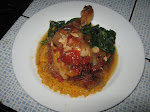
Cooking At La Cusinga with The Chef of the Jungle
Yes, finally, my cookbook of recipes culled from my time at La Cusinga Lodge in Costa Rica is finished and available in a number of different formats. The book is in color and has a number of very nice color photos of food, ingredients and the area around the lodge.
I am selling a beautifully printed high quality paperback that is both signed and numbered out of my home for $24 with postage and handling included.
It can be bought with a check sent to:
David L Mahler
PO Box 397
Scotts Mills, OR 97375,
or, by Pay Pal payment to:
chefofthejungle@yahoo.com
I am also selling a downloadable .pdf file through the same payment channels for $12.
Cooking At La Cusinga is also available as a "print on demand" paperback and/or as a kindle download through Amazon.com. Additionally it is available as an ebook through Google books.
Those who have bought the book have been effusive in their praise and here are some of the comments I have heard:
"Greetings Chef Dave; Gayle and I just picked up our signed copy of your wonderful cook book....and are sitting here this moment drooling over the many delicious culinary delights you put in there. Thanks so very much for sharing this wonderful cooking experience with the world."
From Patrick Pealer, "Hey Chef, we got the books! You should be extremely proud. (as I am) They are beyond gorgeous. We thank you more than words allow."
Received your fabulous book yesterday afternoon! My husband and I are so excited about cooking fish over an open fire! We have a firepit, and a grill that fits on top of it...so we are pretty much ready to go!!!! Also learned something totally new about olive oil. Just read your explanation to my David. One of my favorite sections is Salsas/Sauces...these are going to be such fun to prepare and enjoy!!!!! Thank you, Chef Dave! Your book has a special place in our kitchen and in our hearts ♥ ♥
My friend Pat Benson received her cookbook yesterday and this is what she had to say:
"David, your cookbook is amazing. The details, photos and of course recipes show what a talented and dedicated Chef you are. Thank you for keeping this project alive and bringing it to print. It was a long road, for sure."
"Book arrived yesterday; I second Pat's emotion. I got a particular kick out of checking off all of your dishes I'd eaten and jonesing over the ones I missed. Bravissimo! Your writing took me right back to LC. Very gracious tone about the whole work from One Classy Chef of the Forests North & South." Chris Migliaccio
So don't miss out on this very special cook book. The recipes are exactly what I served at La Cusinga and the book is filled with great cooking tips and in depth explanations of techniques and "the why and wherefore" of the recipes. Additionally the book has an in depth glossary of local ingredients and terms and is beautifully indexed.
Please get in touch with me now to get your own signed and numbered copy.
Friday, August 24, 2012


Monday, July 30, 2012
COOKING AT LA CUSINGA: THE MAKING OF A COOKBOOK
I am a chef. And I am the author of a cookbook, a real live cookbook (“Cooking at La Cusinga with Chef of the Jungle”, available on Amazon and Google). Finally. It sounds easy, doesn’t it? Lots of chefs write cookbooks, and lots of people who are not chefs write cookbooks. How hard can it be to write down some recipes, especially if you create them every day? As it turns out, the writing is the easy part, but self-publishing a finished, beautiful, heft-it-in-your-hand-and-drool-over-the-photos cookbook took a lot more steps than I knew existed.
The writing and publishing spanned two countries and two years. Working at eco-lodge La Cusinga on the Pacific coast of Costa Rica, new recipes tripped over one another as I discovered the underutilized bounty of amazing ingredients available. Shrimp, mangos, ayote, mandarinas, hearts of palm, artisanal goat cheese—these ingredients don’t show up in the faux French restaurants that tourists flock to, and the locals stick to beans and rice. I got to know the owners of tiny organic farms and bought fish right off the boats. The lodge was full of guests and rare was the day when I wasn’t asked for a recipe for one my “fabulous” fresh tasting dishes. “You should have a cookbook, why don’t you have a cookbook?” I heard it so often I started to believe it. My boss offered his backing, and we were off and running.
It took about 250 hours of writing and menu testing to get the recipes down on paper. The photos I took on the fly as we served the food. With a talented local artist working on the cover, we were getting closer to production. Under the vagaries of life stepped in, and I found myself moving to the Willamette Valley in Oregon to be with my fiancée, leaving the tropics behind but confident that I could find a small publishing house interested in “Chef of the Jungle”. After all, isn’t Costa Rica the darling of high-end vacationeers in the U.S. and elsewhere? But I got a quick turndown in some cases and no response at all in others. “No one cares about Costa Rica” was the opinion of one publisher. I shelved the book. I sulked. I immersed myself in cooking.
Fast forward six months. With strong encouragement (read kick in the pants) from my fiancée and family, I pulled the files back up and took a look. It wasn’t bad. It was better than I remembered. In fact, it was even pretty good. Good enough that I blithely thought, in this day and age of on-line wizardry, “I’ll just publish it myself.” Ha.
It helps if you have a team. My sister, a professional indexer, edited and indexed it for me. (We all know how crucial a good index is to a cookbook, how many times have you cursed when you couldn’t find an entry for “chard” because it was under “Swiss”?) My brother-in-law worked on the cover. Together they formatted it and dropped the color photos into the right places. My younger sister did the copy editing, weeding out stray commas with a vengeance. They all, bless their hearts, made “suggestions”. Suggestions incorporated, final adjustments to color, indexing, and table of contents made, photos in place and text formatted, it was starting to look like a book.
But there are more steps than that. A book has to be copyrighted. It has to have a barcode. It has to have an ISBN number, two in fact—one for the hard copy and one for the .pdf version. Check, check, check. It was ready to sell.
Sell, yes, but how? So many people had told me that it was incredibly simple, a piece of cake (no pun intended) to create an ebook through Google or Amazon. Uh huh, right. That would be for those of you that are versed in the intricacies of .pdf and jpeg files, of royalty and pricing platforms. I floundered in the minutiae of Google’s instructions (where the book still languishes). I did manage, after several false starts, to get the book into a Kindle format using Amazon’s KDM program. Still working with Amazon I dug into their Create Space program to turn the book into a “print on demand” paperback. Create Space reported the book ready to print and sent me a proof (not free). Some issues remain, but with Create Space you can fix things as you go.
Some of us are still adherents to real books, made with paper and with pages you can turn, and I wanted printed copies that I could sign and sell, that you could prop up in your recipe holder or give to your aunt for Christmas. I needed a small, high-quality printer that would do a run of 100 books or less, all that my budget would stand. On a lead from an old Mennonite bookbinder practically in my own backyard, I found a small printer, Gorham Printing, up in the tiny town of Centralia, Washington. The price was right, and off went the .pdf files. Now I had both digital and hard-copy books I could sell.
Ah, yes, sell. As in, marketing. Ugh. I turned to Facebook—mocked by many, but still a great way to reach people. A copy of my book cover posted, I sent it to every “friend” I could think of, and, by virtue of Facebook’s pervasiveness, to some I couldn’t think of as well. I pushed the ease and familiarity of buying it on Amazon. I pushed yesterday, I pushed the day before yesterday, and I pushed this morning. I wangled a full-page story in a Costa Rican newspaper, and put an ad in a coastal magazine. I’ve been lucky enough to have a good number of pre-orders, some Kindle downloads, and a handful of “print on demand” paperbacks. I got great help getting here from friends and family, but now it’s up to me. Sales, R&D, bookkeeping, inventory control, and tech support. And, oh yeah, I’m also the author of a cookbook. And a chef.
Wednesday, March 28, 2012
Empanadas, Big Party and What We Learned
Two things, there are two things I did this Saturday past that I knew better than to do, but did, in fact anyway, thereby causing myself a certain degree of both misery and pain.
In reality, one of them began far earlier than this most recent Saturday, when several weeks ago I was asked about, and was pontificating on, in a Chefly way, which hors dooveries we could serve at a big ol' wine tasting event (400 guests), one in which we would need 1000 pieces of whatever we chose (two items). I posited how it might be nice, and something no one else would be doing, to make and serve empanadas as one of our offerings. Yes, empanadas; little pastry crescents filled with some attendant goodness, baked and sauced appropriately. This is not something that I've often done, but it sure did sound good in my boss's office that day.
My other suggestion was to do Mushroom Risotto Cakes, something I've been doing for years. These are a surefire hit when topped with some kind of nice aioli, and I chose a green version flavored with vast quantities of green onions and parsley for this one. This is a pretty easy app to put together although it does require standing and stirring a massive steaming cauldron of napalm-like boiling rice for close to 25 minutes. Once that's done and the risotto is poured out onto sheet pans the rest is pretty easy. It gets chilled, cut out and breaded and is ready to be fried or baked. And it is a great vehicle for using up all the ends and funky chunks of cheese that a catering company/restaurant naturally seems to gather in the course of sending out multitudes of cheese trays.
My boss, said, "oh cool" or the equivelent thereof to my suggestions and so it was to be.
The week arrived upon which the party was to be held thinking ahead, as I am occasionally prone (prone indeed) to do I asked our kitchen manager to order me 20# of boneless beef chuck. I was thinking that I would braise it, days in advance, in a low and slow fashion, so as to have time to shred it and mix it with various and unique flavoring agents. Plan ahead and do this sensibly, day by day. That sounded good, at least in my tiny mind and on paper.
I ambled into the kitchen two days before the blessed event (lots of ambling going on when this is the only gig of the entire week) to get that big chunk o' meat in the oven along with some onions and garic and chiles and red wine, and received a major surprise. The big ol' chunk of meat I expected to drag out of the cold and into the warm is NOT 20# of beef chuck, but is instead, two 10# tubes (yes, 20#) of ground chuck. It was boneless, yes, but hardly suitable for our purposes.
So we did a lot of phonin' and we did a lot of moanin' and finally we arranged to have the 20# of boneless beef chuck delivered, but because it came from somewhere far away it would not arrive until the morning of the day before the blessed event. I began to mutter my favorite quote about mice and men. It was going to have to wait until Friday and that's just the way it was going to be.
I pulled in Friday morning and proceeded to ready the large chunk of chuck for the oven. I started off by sticking it all over with a boning knife, salting and peppering it and then rubbing it down with a paste of garlic, jalapenos and olive oil. I sliced five onions and spread them over the top and all around the spiced and rubbed meat. I poured in a two cups each of wine, stock and water, double wrapped it in foil and started it off on it's long relaxing journey to tenderness in a 325 degree oven. I didn't know it at the time, but this journey to tenderness would not come until waaaay later in the day, when I had left the building.
I hauled out the giant rondeau (a large, low and heavy cast aluminum pan) and after much stirring and not an insignificant amount of perspiring managed to get five sheet pans of garlicky cheesy mushroomy risotto made in the meantime (where does the phrase/word "meantime" originate from, anyway? Yeah, I know, google it). Next were the sauces for the risotto cakes and the empanadas. As I have mentioned, the risotto cakes would get a nice rich green herb aioli while the empanadas (which I have not mentioned) would get not one, but two sauces, each based on roasted peppers, one red and one yellow, but with decidedly different flavor profiles. Both would be olive oil mounted purees, the red flavored with roasted garlic and chiles, the yellow with sherry vinegar, shallots and dijon mustard.
So we arrived, the noble and hardworking Pedro and myself, at 9:00 Saturday morning knowing that we had to cut and panko (my kind of verb) the risotto cakes which would be a snap, if a time consuming one, but also that we had to assemble the empanadas from scratch. And this is where the first of my "knowing better" bells began to ring in the larger of my two heads. "This was dumb" it rang, "this is going to suck", it pealed. "This is going to take FOREVER", it gonged. And I tried not to listen, but it was far too late.
So, we shredded the 20# of very, very tender boneless braised beef chuck and then we chopped it by hand, the food processor rendering it too mushy. I blenderized it's pan drippings and the attendant flavoring agents (lots of onions) once they were defatted, and mixed the hand shredded and chopped meat with several cups of roasted corn I had stashed away and frozen back in the season, several more cups of nicely soaked and plumped golden raisins, and five or six finely chopped jalapenos. The rich braising liquid pureed with the nearly melted onions made sort of an onion soup to the Nth degree and was perfect as a binding/moistening/flavoring agent. But, The Clock Was Moving.
Now it was time to Make The Empanadas. We (I) moved into dough mode and began churning out small batches of the empanada dough in the food processor while the loyal, noble and hardworking Pedro began the rolling, filling, folding and crimping (yes, with a fork) process. It was slow going, stultifyingly slow going and I began to get a little, not a lot, but just a little concerned and somewhat manic. Failure is not something we cotton well to in the food business.
And it was here that the second of the two misery and pain producing things that I knew FAR FAR better than to have done occurred. On about the fifth or sixth, but could easily have been on the sixth or seventh, batch of dough I stopped the food processor because I didn't think the water I had just added had mixed in with the dry ingredients at the bottom.
So (and here's where it comes, folks; "Don't do it, don't go in the haunted cave" they scream from the cheap seats) I stuck my right hand down into the bowl of the food processor and in doing so managed, unbeknownst to me, to hook my middle finger under the cutting blade. And then what could have happened did. Upon attempting egress with my hand I caught the fleshy part of the top digit of my finger against the blade and pulled up. Halfway through the action and before it was complete I knew exactly what I had done. I ripped my hand out, causing the bowl and the top parts to fly across the kitchen and screamed, "No, no, you stupid asshole, no!!!" But it was too late. I had opened up a big crescent shaped gash in the previously mentioned fleshy part of the top digit of the middle finger of my right hand. And there was that moment, that priceless second where I looked at it and could assess the nature of the damage, just before the blood came pouring out.
So at that point the selfless, noble, long suffering and hardworking Pedro had to quit rolling and filling and folding and crimping (yes, with a fork) and also become the doctor. I got a towel on that sucker as fast as I could and squeezed it for all I was worth. Pedro got the goods and he proceed to first sterilize, then bind that damaged digit as tightly as he could, me urging him on to wrap it tighter and tighter. Oh yeah. And now it was big and bulky and white and a rubber glove wouldn't even fit over it, although Lord knows I tried. And The Clock was still moving.
It was now late afternoon and we were only up to 280 (four sheet pans) of empanadas. We kicked it in, although I must say, it is no mean feat rolling out dough, and cutting, filling, folding and crimping empanadas with a finger the size of an andouille sausage. Pedro, bless his noble and hardworking heart kept on rocking and rolling (not to mention, filling, etc...) and the two of us labored over the table in quiet backbreaking desperation. By 5:10 (we were to leave at 6:00 and still had to fry the cakes and bake the precious empanadas) we had 510 of those little suckers all filled and ready to go. Que milagro!
The final hour was a bit of a blur, but it all got done. I discovered, much to my delight and relief that I could avoid frying the risotto cakes by spraying them with non-stick spray and putting them on the very top rack of the convection oven. It may not have been frying, but it got them brown and hot and at that point that was just about all I was looking for. The empanadas were in the bottom of the two ovens, doing their level best to get a lovely golden brown and the risotto cakes were in the top.
Every last one of those perfectly browned 1050 morsels then had to be transferred from the sheet pans into 2" hotel pans (because they're the only ones that fit) for transport in our heated cambros to the site of the blessed event and somehow they made it. Josh, the dishwasher showed up about an hour or so after we really had needed him, but it meant that neither I nor the hardworking and fiercely loyal Pedro would have to clean up the colossal mess that can only be made by two people doing the work of four or five or six. Pedro and I jumped into the van with the alacrity of two men who have just worked nine straight hours on their feet without taking a break and we were off to the hills of West Salem and Zenith Winery.
The event itself, an Equinox benefit for something or another was massively anticlimactic compared to the day's events, but Pedro and I did get to wear our new monogrammed black Chef's jackets. We also got to rehearse our song and dance about what it was that we were serving because we had to do it a couple of hundred times each. And amazingly every single one of our 1050 bites of food got scarfed down my a bunch of folks from West Salem who somehow all seemed to get drunk drinking one ounce of wine at a time. The risotto cakes seemed to be Best in Show among all the food items, we were told our table and food were the best time and time again, and some guy in shorts stood off to one side of our table and must've scarfed down 30 empanadas all on his own.
There we stood at the end, bloody but unbowed. 13 hours our feet without a break (except for the bandaging process). My back ached from the time spent over the table lovingly preparing the empanadas and my finger was throbbing like the floor when you live over a houseparty. Pedro, the hardworking, loyal, trustworthy, brave, clean, thrifty and reverent Pedro turned to me and said, "Chef David, when I work with you, even when I work hard I always like it and I always learn something."
I eyed him dimly, a certain amount of fatigue coloring my view. "What did you learn today, if I may ask?"
I eyed him dimly, a certain amount of fatigue coloring my view. "What did you learn today, if I may ask?"
He looked me right in the eye and said, "Never do empanadas for a big party."
Thursday, March 1, 2012
HOME COOKIN', PART 2
HOME COOKIN' PART 2
It's been pretty slow times around the catering kitchen and a by-product of that, if indeed the word "product" can be used when there is not a lot of anything being produced, is that I find myself doing a whole lot more cooking here at home. And since the by-product, or lack thereof, when one is not working is a lack of serious cash flow, one makes do as one must, with left-overs, freezer raids and eyes to that which goes on sale at the local market.
The last week has found me turning out soup, hash, tacos, a slow-cooked cheap cut of pork and in one fell swoop of a splurge, a whole roast chicken with risotto. The soup, hash and tacos were fashioned purely from refrigerator and freezer foraging and the pork and chicken were the result of carefully eying the sale section of the meat department.
*******************************
The soup was a classic "homemade" project, based on some leftover barley and lentils that Kathy had made for a salad. I started by sauteeing your basic bottom of the crisper drawer vegetables; a couple of carrots, two or three ribs of aging celery, an onion and plenty of garlic in bacon fat (always a stash of that in a jar in the refrigerator door), along with two smoky pork sausages that were lurking in the back of the freezer.
Once that had filled the kitchen with it's splendidly garlicky aromas I added the lentil/barley mix and part of a bag (about two cups) of our "roasted tomato shmoo", (see earlier entries) made in large quantities last year as fall neared its end. I filled the soup pot with a little over a cup each of homemade chicken stock and water. There wasn't much to do at this point but bring it up to a boil, then turn down the heat and let it simmer for an hour or so into something resembling dinner.
And a fine dinner it was, served in deep bowls, steaming hot on a cold night. We stretched it out with warmed Tandoori Naan, a package of which had made its way home with me after a sample case had been left at work by our thoughtful Sysco rep. When I do work, it's good to work in the food service industry.
*************************
Hash was something I had not made since the days I worked at the Elite Cafe in San Francisco. There, each week, we used our leftover filet ends and trimmings to make an extremely peppery and popular poached egg topped hash for Sunday brunch. Here at our house it wasn't exactly the ends of beef tenderloins, but rather a largish chunk of turkey breast that had been cooked in the crockpot along with cream cheese, soy sauce, roasted red peppers and dried herbs according to an old recipe of Kathy's.
I had come across a ziplock bag of said turkey during one of my monthly freezer purges and had wondered what in the world I was going to do with it. As providence would have it, the night before I had cooked a simple dinner of some kind of protein product and served it with sauteed broccoli, red peppers and yellow crook necked squash. Quartered roasted potatoes from our "root cellar" had filled out the menu. I had asked Kathy what she wanted me to do with the leftovers and the first thing out of her mouth was, "make hash." The mother of invention, indeed.
I cut up yet another onion and sauteed it slowly in more bacon fat along with a quarter stick of butter. While the onions cooked I shredded the turkey, chopped the vegetables and cut the potatoes into small cubes. I caught the onions at just the point of turning a lovely golden color and sprinkled a tablespoon or so of flour over them to make a roux. I still had chicken stock because I almost always have chicken stock, so I poured some in, brought it to a boil, and there it was, the gravy that would bring everything together, binding the hash, if you will.
I knew I couldn't and shouldn't stir the hot gravy into the coolish turkey-vegetable mix, so I stuck it in the refrigerator while I went out for herbs. I snipped several lengths of chive, grabbed a handful of parsley and a couple of sprigs of thyme. I brought this back into the kitchen, destemmed it and chopped it up to add to the hash base. When the gravy was cool enough, I mixed it into the turkey and vegetables and it bound it all together quite nicely. The whole mix went into the refrigerator so the flavors could get to know each other informally before being cooked and eaten.
It didn't seem as if hash on its own would be enough so I put together a small green salad; red leaf (of which there seems to be a lot around this winter) lettuce along with some diced hothouse tomato (sigh) and a small Hass avocado. I heated up a non-stick 12" skillet and rubbed it with just a bit of bacon fat (can you tell how I feel about bacon fat?) before pressing the hash mixture into it. It browned nicely on one side before I did my former breakfast cook show-off thing and flipped it all over in one piece. I put the pan (and the hash) on the bottom shelf of a 450 degree oven for about ten minutes to assure that it would heat through and that each side would have a nice crust. Crust on hash is critical.
It came out great!! The top and bottom were crispy, it was just moist enough from the gravy, and the flavors had gotten to know each other in a most advantageous way. The green salad provided just enough crunch on the side and we had feasted yet again, while spending virtually nothing. I like that.
***************************
On a day we were snowed in the craving of the day turned to tacos. Oh yes, spicy and well garnished tacos on a cold and blustery day would be perfect! There was a chunk of flank steak, a nice ripe avocado, plenty of cheese, onion, tomatoes and even cilantro, but, oops, NO TORTILLAS.
This sent me scrambling in the pantry looking for something I wasn't even sure was there, but, lo and behold, there was a nearly full bag of "Bob's Red Mill Masa Harina", a corn flour ground right up the road in lovely Milwaukie, Oregon. Indeed there was even a recipe on the back for making tortillas which I set to immediately. Hot water mixed slowly into the masa, not too sticky, not too dry, roll into a ball and let rest. Easy, but in the back of my mind it seemed as if something was missing.
Putting that thought away, I turned to making a nice little "guisado", or stew, out of my meat and vegetables. I peeled a couple of cloves of garlic and sliced my onions into thin half-moons and tossed them in a skillet with some (yes!) bacon fat. I seasoned the stuff in the pan with chile powder, a dash of cumin, some ground chipotle, salt and pepper and a hit of smoked paprika while I sliced the beef into thin strips. I always cook my dry ingredients, particularly chiles, into the mix for a while to bring out their flavors. I added the meat, a chopped tomato and about half a cup of chicken stock and after it came to a rapid boil, turned it down to the barest of simmers.
I turned to the garnishes, everything that would elevate our tacos on this snowy afternoon. I peeled and diced the avocado and tossed it with a splash of lemon juice and a little bit of Cholula hot sauce. I grated a mix of pepperjack and cheddar cheeses, shredded a couple of leaves of romaine, chopped a bit of cilantro and plopped some sour cream into a bowl. The guisado smelled great and the liquid had cooked down just a bit; ready. Now for the tortillas.
I heated up a ten inch cast iron skillet and rubbed it with (yes, again) more bacon fat. Using a smaller cast iron skillet I pressed out the tortillas between sheets of wax paper. Surprising to me that we had wax paper, beyond the surprise that they still even make the stuff. The tortillas were not easy to peel off the waxed paper, however. When they were the thin-ness I wanted, it was damn near impossible, so I went for a thicker more rustic feel.
Into the pan the tortillas went, one at a time, and I called Kathy into the kitchen to stand at the ready to assemble our tacos. The first tortilla came out, crisp and smelling so, so very good, and it was here and now that it came to me what I had left out of the tortilla mix. As we folded them, they cracked at the back; they were not at all pliable and it was clear to me now why professional tortilla makers put lard in the mix. Yes, of course it adds flavor, but it also lends a certain moistness that enhances and strengthens the fold.
Despite having ingredients that fell out the back, we fell upon the tacos rapaciously. The snow fell, the ingredients spilled and we stuffed our faces, going back to the pan again and again. And this is something we will do again and again, at least when we forget the tortillas.
*****************************
In addition to scouring out the kitchen in search of cookable leftovers, I have also, for the first time in my life, been scouring the food ads (not to be confused with the food sections) of our local newspapers looking for deals on whatever may feed us and fill us without mauling our pocketbooks. And I struck pay dirt, so to speak. There it was, Boneless Pork Shoulder Roast, reduced to $2.39/# (limit two per customer). I made my way on down to Roth's IGA, our local grocery and picked us up a 3.5 # chunk of pork and happily brought it on home.
This is one of my favorite pieces of meat to cook and it takes so well to a variety to treatments. I decided to go with the "low and slow" version this time that is almost like a Mexican-style carnitas. I fine chopped 12 garlic cloves along with some of Philipe's Kitchen Witch (straight from N'Awlins) Seasoning and some sea salt. I rubbed this all over the roast, making sure to get it down into the crevices and cracks between the muscles. I thin sliced an onion, laid it over the top and into the refrigerator it went for an overnight get-together of flavors.
The next day it was an easy start: Put the meat in a low roasting pan, pour in a cup of water, cover tightly with foil, stick it in the oven at 275 and walk away. I came back four hours later, took off the foil, basted the top of the meat with the nice fatty juices that had collected in the pan and left it for another hour to lightly crisp the top. Presto! Crispy Carnitas without any frying, and meat that literally falls apart at the touch.
From this point on, once the meat is cooked, it becomes so many things to so many people. The first night we ate it over mashed potatoes with the pan juices (defatted, of course) ladled over the top. Oh My Goodness was that good. The second night I shredded it, mixed it with a bit of a red chile enchilada sauce I had made last summer and it became the filling for burritos. The other day while we were working outside in the cold, I darted in, heated some up, slapped it between two pieces of bread with cheese, griddled it in a pan and made toasted pork and cheese sandwiches. Tonight it will become the "World's Best" Pulled Pork Sandwiches and that still leaves us enough for soup and maybe another meal. It's hard to imagine a better deal for your dollar and the flavor of slow-cooked pork is to die for.
*************************************
Last, but hardly least, Kathy's very best friend Terry was here visiting from Costa Rica so we put on a good show for her. Whole, locally raised Draper Valley chickens were on sale so that seemed like the way to go.
I did a simple roast chicken; salt, pepper and a lemon and butter rub. I roasted it for about an hour at 400 and it came out perfectly; crisp golden skin and very juicy. We served that over a risotto made with some liquid from the very last of some dried mushrooms we had mixed with chicken stock. I sauteed some fresh crimini mushrooms to make the risotto a bit more "mushroomy" and the chicken, sliced, went over that. We had just gotten some decent asparagus at the market and a simple steamed and buttered prep made the whole dish come together. I made a little gravy out of the pan juices and we sat down to a lovely dinner of roast chicken by candlelight.
We may not be working much, but we can still eat well, and sometimes, that's the best revenge and remedy both.
Tuesday, January 17, 2012
Foraging in a Blizzard
Here we are in the second day of being snowed in and the third, (or is it the fourth?) day of snow and I am learning why it is that we have a winter garden, a good storage shed, and, naturally, a freezer. While the snow comes down sideways and the vehicles remain anchored in the ice, I am inside making the most, yet again, out of what we have put away for a rainy/snowy day. And yes, we are both praying prayers of hope that the power/water stay on.
The household foraging began a couple of days ago when I pulled a ball of pizza dough from the vast and icy deep and made a pizza with homemade sausage, garden onions out of the storage shed and tomatoes we had dried ourselves. Kathy had made a small provisions run when we heard the snow was coming and we had a nice combination of cheeses to make the pizza really sing.
Yesterday was chicken stock day and the house was filled with the aroma of nicely roasted bones simmering with their attendant and complimentary vegetables and the house still has that roasty rich smell hiding in different corners and down the back hallways. I've always contended that, rather than the"smell of chocolate chip cookies baking" theory that realtors proscribe to for selling homes, that the "aroma of homemade chicken stock" would work even better.
While the stock hoozled and goozled happily yesterday morning we went to the freezer yet again looking for food to feed unexpected lunch guests. Kathy's daughter, son in law and granddaughter made the trek up the hill to visit us, (but mostly to play in the snow) and we needed a cold day meal for them. We went deep into the freezer and came up a container each of chile and a multi-bean soup, made long ago, and along with some homemade biscuits we had just the meal for hungry and rosy cheeked sledders.
Today we woke to a healthy six inches of snow on the ground and the first flakes of another heavy fall just beginning to fly. I had pulled a chunk of chuck roast from our neighbor's last cattle harvest out of the freezer and the plan was for pot roast. I had, however, used all the carrots in the chicken stock and Kathy, who had promised for the last several days to pull up some carrots from their winter bed, was now faced with having to do it in the teeth of the blizzard.
And like the true Oregonian she is, she threw on a parka and hat, got down on her knees at the edge of the raised beds, dug through a half a foot of snow and yanked up carrots. Meanwhile I was making another treacherous run to the shed for the garlic and onions harvested lo, those many months ago, to accompany the carrots in their support of the chuck. Moreover, we had the remains of an old funky bottle of red in the back of the fridge that was just what my recipe called for.
The snowfall is thinning slightly and it appears that we will be able to venture out away from this property tomorrow. But the scent of the pot roast is alluring and serves as a reminder of the beauty of stored food. There are times when the thrill of finding those hidden chanterelles or fiddle head ferns under the scruffs of fir at the base of tall trees is a forager's dream. Other times, however, and these are those other times, the best foraging is done by rummaging at the bottom of the freezer, digging beneath the snow, or rootling around boxes in the shed for the last of the summer's harvest.
Wednesday, December 21, 2011
BURNT ONION GRAVY, and the nature of stocks and roux
Is Burnt Onion Gravy really made from burnt onions? And if it is, how the heck does that work?
A perfectly viable question and one made even more real to me when I posted a picture of a recent batch of the aforementioned gravy on my Facebook page and a friend asked, "So, was this a a mistake that you had to throw away?"
I explained to her, as gently as I could, that no, it was not a mistake, and that it was, rather, the name of the sauce/gravy. I also felt that I should mention, that I rarely posted pictures of my cooking errors on Facebook, although once I thought about it, the notion kept me rather entertained.
And so it struck me that perhaps I might write a bit about the nature and history of this Burnt Onion Gravy (from hereon out known as BOG), but also take the opportunity to discuss stocks and roux and how they go together to make sauces and yes, gravies. It does take a plan and a pretty good recipe as well to make something with the word "burnt" in the title taste good and I'm going to tell you how to do it.
I learned to make BOG from a friend and mentor, Philipe LaMancusa, while we were working in what was, at the time, a very hot San Francisco restaurant called Embarko. Philipe is, along with being a man who has a very real feel for food and what makes it taste good, also a man with a droll wit and a good vocabulary. We had dishes on our menu with names like "Jamaica Mistake?" (for a jerked pork dish), and fish dishes described as being served "with a squeeze and a pat" (lemon and butter, natch).
BOG was a the sauce that went on a pan fried pork medallion dish that passed through our menu for a brief while. The dish came and went, but the sauce, it's composition and, of course, its name, lingered with me right up to this very day. This sauce is the very essence of a series of ingredients coming together to make a huge flavor with the use of some classic and some not so classic cooking techniques (and a little imagination).
So let us leave this amusing story and its colorful folk, and talk about sauces and stocks, and what gives them the flavors that make one better, or at least different than, another. Really, what this is all about, and what I seem to write about more than almost anything, is FLAVOR. How to capture it; how to enhance it, and how to bring it out when it seems most elusive.
The first building block of flavor, not only in this particular recipe, but in so many, many more is the making of stock. In this case we're talking chicken stock. I know all of you are nodding your heads in abject boredom and saying, "yeah, yeah, yeah, Chef we know all about chicken stock", but none the less, at the end of this I will provide a recipe for chicken stock (the way I do it) and for everything else that we discuss in this particular blog post.
In the interest of creating and building flavor, however, we are going to take our chicken stock one step further and make chicken stock squared, or, "dark chicken stock". This richly flavored dark chicken stock is some killer stuff and can be used to bump the flavor level up in a great many of things you cook. It's a simple enough process, too, it just requires patience.
What you need to make this liquid gold is take all the ingredients you would put in your first chicken stock (which you need to have already made and cannot make this second batch correctly without), that is to say, bones, mirepoix, spices, etc., and put them in a roasting pan in a hot oven (400) until the are nicely browned and caramelized. You will then pull them from the pan, put them in a stock pot, deglaze the pan with a cup of two of your previously made chicken stock (taking GREAT care to really scrape up all the good browned bits off the bottom) and pour that and the remainder of your first batch of chicken stock over the nicely browned bones and veggies.
Got it? Now cook it like you cooked the first batch of stock and you will be amazed at the results. What you get by the time you have cooked it for several hours, strained it and refrigerated it so that the fat congeals on top (for easy removal), is a dark, rich and extremely flavorful nearly sauce-like stock that will bump up the flavor of anything to which you wish to add it.
What we are going to add our dark chicken stock to in this recipe is a roux that is made from the oil that a batch of onions have been cooked in until they are just past the point of caramelization and are definitely crunchy, if not exactly "burnt". Got that? Onions, oil/butter, flour. A roux, you say, you ask, you posit; isn't that just flour and oil mixed together to thicken something? Yes, I say, true indeed, but more than just being a thickening agent, a carefully cooked roux can influence, carry and change the flavors of sauces and soups to which it is added.
Roux was invented by the French and used, yes, almost exclusively as a thickening agent. In the French kitchen it is rarely cooked past a point of pale blonde and only then so that it will blend more easily and not separate in the liquid to which it is added. In fact, beurre manie, used to thicken a number of sauces, is merely softened butter and flour mixed together and never cooked at all.
There is some evidence of darker roux in some Swabian dishes of Southwest Germany, but it was the Creoles and the Cajuns in Louisiana who originated long cooked dark roux and created the dishes in which a dark roux would become flavoring agents rather than just thickeners. Gumbo, of course, and etoufee for another, are dishes in which the long cooked roux takes on a nutty subtle flavor that becomes an undercurrent in the final flavor of the dish.
Additionally, as the roux is cooked and the flour begins to change color, it loses much of its glutinous characteristics and becomes more a flavoring agent and less a thickening agent.
Now that we have our dark chicken stock and an understanding of roux, we can return to the cooking of our BOG and that starts with onions; lots of them, thinly sliced. For a batch of this gravy that will use 1 Qt. of dark rich chicken stock, use 5-6 large yellow onions. These onions will get cooked in a heavy skillet with high sides first in just oil and later with butter added until they begin to brown (the full recipe for this will appear at the bottom of this blog). The onions will, of course, have to be stirred, but not so frequently at the beginning as at the end.
While the onions are browning, bring the dark chicken stock up just short of a boil and hold it on a low flame so it stays warm.
Start the onions in the oil, but once they have begun to take on a nice golden color, add the butter to hasten the browning process. Now you will have to watch them closely because the whole butter that you are adding contains milk solids that will brown (and even burn) very quickly. I use a wooden spoon for stirring the onions so that I can easily scrape them off the bottom as they begin to stick and become darker and crunchier.
And at last you will notice the thinner of the onion strands beginning to look dark, short of black, but definitely becoming darker. They will try to stick to the pan but be diligent; keep stirring, but watch them very closely, you are almost at the point where they will need to be removed from the pan. As we move beyond caramelization into a cooking to crispy of the onions, reduce the heat under the pan and remove them to a colander placed over a bowl using a slotted spoon. Some of them should be decidedly crunchy and nut brown to nearly black.
Now you have a heavy pan with onion flavored cooking oil and it's time to build the roux. Classically, a roux is made with equal parts of flour and oil, so if you have used two ounces of oil (plus a bit of butter) add two ounces (and just a bit more) of flour to the pan, turn the flame back on fairly low and whisk the flour into the oil in the pan. At this point, also, pour the drippings from the drained onions back into the pan.
The flour should immediately pick up a bit of color from the cooking oil and will be a muddy kind of brown. Keep whisking it in the pan over the low flame and you will notice two things about it. You will hear it beginning to cook, but you will also start to feel it cooking, as it will begin to thin a bit in the pan and will whisk more easily. This is an important part in the development of the roux and it means the flour is cooking in the roux, the glutens are breaking down and the roux MUST be kept moving in the pan; not fast, not necessarily briskly, just moving, always moving.
And now the roux will begin to become seriously brown, first to a color nearly like peanut butter and then closing in on chocolate. This is the all critical moment. It is time to add the stock to the roux. This is thrilling, but a bit dangerous, so it is important to do two things (once again): Add the stock to the roux slowly with a ladle waaaay over to one side of the pan, and; whisk continually on the side of the pan away from where the stock is being added because it will spatter. The sauce will thicken immediately with the addition of the first ladle of stock, but keep ladling and whisking until all the stock is incorporated. Now and only now, raise the heat below the pan and bring the gravy up to a slow boil.
Now wasn't that fun? You're almost there. You've mastered dark roux and you should have a deep rich brown (and slightly thick) gravy simmering in the pan. Pull the pan over to one side of the flame and once it is at a low boil, lower the heat again, stirring as you do. As the liquid bubbles on one side, it will push the impurities in the gravy to the other side and you can skim them off with your ladle. Add the onions back to the pan and now you have everything in your BOG. Allow it to continue to cook on a low heat for up to half an hour, but at least for 15 minutes, stirring it occasionally and skimming it as needed.
Check your gravy for salt and add it if you like. I like. And I also like to add a dash or two of hot sauce, a little bit of L&P (Worcestershire Sauce) and pepper. This gravy is great to use right now, but will refrigerate (and freeze) quite nicely. When you bring it back to heat (particularly if you have frozen it) you can add a third volume of water as the gravy will have become very concentrated and rich in flavor. I serve this gravy over roasted pork loin, roasted chicken breast, or I add it to soups and stews. It is also wonderful poured over a big bowl of garlic mashed potatoes. Now there's comfort AND flavor in a bowl.
BURNT ONION GRAVY
5-6 Large Yellow Onions, thinly sliced
2 oz. Canola Oil (or other light cooking oil)
1/2 Stick Unsalted Butter
3 oz. Flour
1 Qt. Dark Chicken Stock (hot)
S&P to taste
In a heavy and high sided skillet heat the oil and add the onions. Cook the onions over medium heat stirring occasionally, until they begin to turn a golden brown. Add the butter and keep cooking, stirring more often as the onions darken.
As the onions begin to take on a very dark color and change texture from soft to crispy, lower the heat to as low as it will go, and lift the onions from the pan with a slotted spoon and transfer them to a colander placed over a bowl.
Add the flour to the pan along with the juices from the onions and whisk until a paste forms. Raise the heat slightly and cook the roux until it begins to turn first the color of peanut butter and then reaches a shade just short of chocolate.
Very carefully ladle the stock into the roux, whisking continually. Keep adding the stock until it is entirely incorporated. Raise the heat again and, stirring continually, bring the thickened gravy to a low boil. Move the pot to one side of the flame, lower the heat (while still stirring) and allow the gravy to simmer. Skim what ever foam comes to the top and return the onions to the gravy. Allow to cook for 15-20 minutes and check for seasonings.
BASIC CHICKEN STOCK
5# Chicken Bones, rinsed in cold water
2 Large Carrots, cut in discs
2 Yellow Onions, cut in large dice
4 Stalks Celery, cut in 1/2" pieces
2 Heads Garlic, cut in half equatorially
2 Leeks, sliced in thin rings (optional)
Stems of one bunch parsley, rough chopped (optional)
5 Bay Leaves
1 Tsp Dried Thyme Leaves (or 7-8 stems of fresh thyme)
12-15 Whole Peppercorns
1 TBS Salt
Place bones and vegetables in a stock pot and cover with 6-8 quarts of cold water. Bring to a rapid boil and then reduce heat to a simmer. Skim foam from top of pot. Add spices and return the liquid to a boil. Once it is boiling, reduce it to a simmer and move the pot so that only one side of it sits over the flame and the liquid makes a small bubble up one side of the pot (this allows a film to form over the top of the liquid, trapping the flavor, rather than cooking it away). Cook slowly, maintaining the bubble at the side of the pot for 5-6 hours, replenishing water if it drops below the level of the chicken bones. Do not stir or mix the stock once it as this point!!!
Strain the stock carefully and refrigerate, taking care not to agitate the liquid. Allow stock to cool overnight and when ready to use, remove fat from top.
Wednesday, December 7, 2011
Purple Hulled Peas
I lived in Austin, Texas for a year and in that time became awfully fond of fresh field peas. Butter beans, crowder peas, lady peas, creamer peas, even black-eyed peas; these are all part of this family of peas, taken fresh from the field in their hulls, and traditionally cooked with a pork product, some broth and veggies. Yes, they are called "peas" and yes, for the most part, they more resemble "beans" in their dried form. Most of the field peas I have cooked are oblong, like a bean, and have that telltale dark (if not black) eye, off to one side of their center.
Of course, it's easy to find the dried version of these in a lot of stores and some of the specialty markets will even carry the more obscure varieties. But really, there is no substitute for the freshness of flavor of these peas when they are cooked right out of the hull. And my first admission, right from the get go here is that is not what I did, or should I say, not what I am doing, because the pot is simmering away even as I type. I am cooking purple hulled peas that my sister Barbara, who lives in Austin, was kind enough to bring me (in their frozen form) on her most recent visit a few weeks ago.
Most of the articles I've perused on the internet tell me that field peas are the sure sign in the South that Summer has begun. But it appeared to me, while I was living in Austin, that there are a number of varieties that produce well into the fall and it would seem that purple hulled peas are one of them.
One of the great delights of cooking field peas is one that I experienced as well in Costa Rica when I cooked frijoles tiernos (translated as, "tender beans) which are also fresh from the hull. They cook in an amazingly short period of time. While the frijoles tiernos took a whopping 35-40 minutes to cook (because, after all, they were real beans) my purple hulled peas have cooked to a lovely tenderness in the time it took me to write these rambling paragraphs. So now all I have to do is turn the heat way down and let them slowly simmer and marry their flavors with the ham hock I took from our Thanksgiving feast, the chunks of homemade chorizo I used and the aromatic vegetables and spices. And yes, the house is filled with the smell of the cooking soup mingled with the smell of burning oak from the wood burning oven. Take that freezing weather!!!
PURPLE HULLED PEA SOUP/STEW
1.5# Bag Fresh or frozen Purple Hulled, or any field, Peas
1 Big Yellow Onion, chopped
2 Carrots, cut in medium dice (1/2" X 1/2")
2 Stalks Celery, cut in medium dice
6 Cloves of Garlic, smashed and chopped
1 Meaty Ham Hock
1 Spicy Smoked Sausage (chopped)
1 TBS Bacon Fat or a (sigh) canola oil
2 Bay Leaves
1/2 Tsp Dried Thyme (or 2-3 sprigs of fresh)
1/2-1 Tsp Louisiana variety spice mix (I use Kitchen Witch, produced by a friend of mine, but you could use any blackening-type spice mix, I suppose
32 ounces Chicken Stock, boxed broth or water, plus 1 Cup Water
I use a heavy cast iron dutch oven to make this in, but any heavy sauce pan will work.
Heat the pan and add the bacon fat and the chopped sausage. Simmer them until the sausage begins to color and is yielding its fat.
Add the chopped vegetables, the dried herbs and the spice mix. Stir and cook over medium high heat until the vegetables begin to wilt and give off an aroma.
Add the peas to the pot along with the ham hock and cover with the broth and water.
Bring the soup/stew to a slow boil and then turn it down to simmer for 20-30 minutes until the peas are tender. At this point I like to turn the heat down to the lowest simmer and let the soup/stew sit on low heat to allow all the flavors to marry into absolute deliciousness. This will be good today, better tomorrow and better still the following day. And it freezes quite nicely.
Subscribe to:
Posts (Atom)