Wednesday, October 6, 2010

WHO WE ARE AND WHAT WE DO

WHO WE ARE AND WHAT WE DO


I returned to La Cusinga in January, 2009 with a dream in mind. I wanted to create a cuisine that would bridge the gap between what La Cusinga offered their guests physically and spiritually, and what they were putting in their bodies when they ate here. Just as La Cusinga represents a sustainable form of eco-tourism, I wanted to offer a cuisine that reflected that same sustainability. I was on a mission to show not just our guests, but also the people of this community that it was possible to create delicious, serious, mostly organic food using entirely local ingredients.

I had in mind a vision that would support local farmers, fishermen and food artisans and one that would create a new cuisine of coastal Costa Rica. I visit the markets each week to talk with growers and to develop the relationships that will be mutually beneficial as Costa Rica experiences its rapid growth on an international level. Dairy farmers, cheesemakers, rice farmers, ceramic artists, vanilla growers and cacao farmers; all are included in this vision.

I am often asked if I cook entirely locally and my answer, somewhat surprised, is always, “Yes, of course, why wouldn’t I?” This should be every Chef’s dream, to be able to provide the food for his guests with ingredients grown less than an hour away. Between the produce we grow here at the Lodge, the lovely organics I am able to buy from my loyal and local farmers, and the fish that come from the ocean I can see from my kitchen, we have created a cuisine here at La Cusinga that is original and unique to this area.

What we are doing is by no means unique internationally; after all the French have been using this model for years and the United States is home to a huge “farm to table” sensibility. But here in Costa Rica our world class fish and produce have been pushed to the side in an effort to create a more homogenous cuisine for tourists. I don’t believe we have to do that and I believe that the ingredients I get here at tiny La Cusinga rival those of any kitchen in the world.

I am proud of the food we serve at La Cusinga. I am proud that organic growers here have risen to the challenge of producing top flight produce and I am proud to be able to go right to the boats where our fish are caught. But mostly I am proud to be able to put food on our tables here that honors and respects the hard work of John and Bella, of Geinier and Henry and of all the people who make La Cusinga the world class Eco-Lodge that it is.

Monday, October 4, 2010

FRIJOLES TIERNOS

FRIJOLES TIERNOS

I must confess to being a bean lover and nothing is better, to me, than using a bean fresh, that would normally be dried. In the States, these are called “shelling beans” and they are taken right out of the pods and sold fresh. They are available at the Feria in San Isidro and during the season, there may be four or five types available.

The joy of these beans is that they cook in 45 minutes or less, cutting at least two hours out of the time on the stove. The real pleasure of them though, is the flavor and texture. These fresh beans have a richness, a creaminess and almost a “meatiness” when cooked that is unsurpassed.

When I see them at the Feria, they are usually laid out in bins, with a few kilos bagged up ready for sale. They are plumper and more colorful than their dried counterparts and there is a sheen to them, as if they have a healthy glow. The colors range from a pale pink to a mottled variegated pink and white to faint shades of green and yellow. Among my favorites are the heirloom variety, “Cua” which is a yellow-brown color, a bit more rounded than elongated with a deep almost nutty flavor.

I cook these beans much like I cook dried beans (except for a substantially smaller amount of time) and find that it’s best to start with a sauté of whichever vegetables you choose and the fat and meat from whatever pork product you like to flavor them. Sauteeing the vegetables gives them a greater depth of flavor that just adding them and letting them boil. For additional flavor I like to add a couple of spoons of of roasted tomatoes, or a handful of roasted pepper strips. You can of course, cook these beans in a purely vegetarian style, but they don’t call it “Pork and Beans” for nothing.

FRIJOLES TIERNOS

1 Large Yellow Onion, cut in ½” dice;

6 Cloves of Garlic, minced;

1 Carrot, cut in ¼” dice;

1 Jalapeno Chile (optional), cut in fine dice;

6 Strips of Bacon, or 1 Smoked Sausage (hot or mild), cut in cubes; or, 2-3 Smoked Pork Chops (it is quite tempting to use a combination of the three);

1 Ounce Light Cooking Oil;

1 Heaping TBS of “Jambalaya Spice Mix”

3 Fresh Thyme Sprigs (or ½ Tsp Dried Thyme Leaves);

4 Bay Leaves

Add the oil and pork products to a heavy pot and bring up to a good heat. If you are using bacon, try to get some color on it. Stir frequently and add the vegetables and the Spice Mix. Stir often, scraping up the spice mix if it should stick to the bottom of the pot.

Add the beans and herbs (and tomatoes and/or peppers, if you like) and cover by 2 inches with water. Bring the pot of beans to a boil and then reduce the heat until the liquid is just bubbling. Allow to cook for 15 minutes and then check the level of the liquid. It is best if it remains about an inch above the beans. Try not to let the beans cook at too high a heat or they will break up and not remain whole. It is important to keep the beans in enough liquid while they cook, but after about 30 minutes, as they get closer to being done, let the liquid cook down until it is just even with the beans. The beans are done when you can just squish them between your fingers. Remember that they will keep cooking as they cool.

Frijoles Tiernos are great served alongside grilled fish or meat, sausages, or along with either a highly seasoned and flavored rice dish for an upscale version of “gallo pinto”.

Thursday, September 23, 2010

TRAVELING CHEF, Part 2

Onward to Oregon!

In the week I've been here the climate has gone from lovely and bright "end of summer" skies, with temps in the low 70's, to cold, windy and downright blustery. It would seem that they take the changing of season both literally and seriously here.

I flew into Portland on a Thursday and had an amazing reunion with Kathy, who I had been Skyping with, but hadn't seen in 42 years. She drove me south of of Portland and down into the N. Central farm country and guided us expertly to our first country farm stand. I was craving corn, corn and more corn, but the late season bounty in this part of the world had me filling bag after bag with produce long out of season in the rest of the country. I couldn't believe my good fortune at finding luscious ripe peaches and my favorites, nectarines. We also loaded up on all three of the berry brothers; black, rasp and blue.

My first night here in Oregon I was presented with a local organic chicken and my choice of vegetables from the garden; my kind of challenge. I stuffed the chicken with stems of lemon-oregano from the garden along with a couple of lemon halves, surrounded it with small garden fresh onions, carrots, whole garlic cloves and potatoes and fired that baby in the oven. I basted it with a mix of lemon juice, olive oil and butter and it emerged from the hot oven a lovely and crisp burnished gold. We added some local green beans (from our earlier stop) sauteed with mushrooms and topped with toasted pine nuts, and of course a couple of ears of sweet local corn. I made a quickie sauce out of the pan drippings and it was country eating at its finest.

Sunday we made the drive out to the coast along the Alsea River and it was a gorgeous pre-Fall day. The maples were turning color, the river was flowing and the road from Corvallis to the coast winds through some dense and verdant forest. We had hoped for fresh Dungeness crab, whole and kicking, but settled for a bag of fresh, local crab meat instead.

I smashed up oyster crackers and along with an herbed mayonnaise that I'd concocted at Kathy's house, lightly bound the crabmeat into six fat crab cakes. I pan fried them and we topped them with more of the herbed mayo and served them with roasted potatoes and a salad of baby spinaches, romaine and peppery radishes, also from the garden. The crabcakes came out perfectly; crisp, light and tasting "oh so crabby".

The following morning we hit the Yachats beach and strolled along, peering into the tide pools while watching two maniacs head out into the freezing surf in their bathing suits. It always amazes me to remember that this is the same ocean I see every day in Costa Rica. It seems so different in color, smell and even in its temperament. The ocean in Oregon is percussive, slamming and sailing into the coast with a power and fury we rarely see way down the coast.

We were all about seafood after the walk so went to a funky chic local spot called appropriately enough, The Drift Inn. Kathy went for more crab in a very nice salad with avocado, crisp romaine and artichoke hearts and I had local halibut done up in crisp breading served with herbed handcut french fries in a great regional take on fish and chips.

That night we went out to see my sister Nancy and her husband Mark's lovely house along the Yachats River and luckily ran into a lovely large hunk of local salmon; a big filet weighing in at at least three pounds. Mark had fired up the grill and I made a glaze for the salmon out of seeded dijon mustard, honey and tamari. My sister had snipped green beans from her garden the way our mom used to when we were small and she sauteed them the same way we had eaten them years ago, with chunks of bacon (although I think this bacon may have had a bit more of a pedigree than Mom's). Mark had made focaccia that he topped with thin slices of homegrown onion and yellow crookneck squash and put back in the oven until the veggies were just cooked.

The fish came off the grill, full of that rich salmon smell that I have missed in the tropics. I love salmon and my mouth was drooling from the aromatics coming off the little Weber. We plated salmon chunks cut from the roast, the bacon-y green beans and wedges of focaccia and we nearly ran to the table. Not much was said for the first five minutes or so, which is always a good sign. The meal was perfect and I got a serious salmon fix.

Sadly, the following day was the journey back to reality, but we made a stop in Eugene at the 5th St. Market and a great bistro called Marche, for the type of food I crave down in Central America. I stared off with half a dozen Totten Bay oysters on the half shell, briny and crisp tasting; almost like falling face down in the chilly ocean. We shared a salad of Little Gem lettuces tossed with an "anchoide" dressing (read, Caesar), thin shards of good Parmesan and garlicky thin crostini along with a BLT with applesmoked bacon, braised pork belly and heirloom tomatoes. We finished the meal with a classic vanilla bean creme brulee. It was a perfect "American Bistro" meal.

We came back to steaks from beef raised by Kathy's neighbors one night and a pot of lentils cooked with smoked ham hocks the next. Tonight will be braised organic chicken thighs in a sauce of roasted garden tomatoes and tomorrow I am, more than grudgingly, in the skies back to Austin and then Costa Rica. I do, however, have the ever-growing Austin Farmer's Market to look forward to; lots of fall vegetables and seriously tasty goodies from my friend Jesse Griffith and his Dai Due butcher shop. There will be at least one more epic feast at my sister Barbara's house in Austin. And it is starting to get just a bit chilly here for my wardrobe, it's time to admit. I've got to get back to where flip-flops, shorts and a loose shirt are the norm, if not slightly overdressed.

Wednesday, September 22, 2010

Traveling Chef

Greetings from the Great Pacific Northwest where they look at you funny if you wear shorts and flipflops in the 60 degree weather; go figure...

I hit Austin on a Monday and walked out of an air conditioned airport into 92 degree heat. Ah, welcome to Texas. My sister, Barbara, picked me up and I was greeted at her house by her husband Pete and a 32 ounce Porterhouse steak. Ah yes, welcome to Texas, yet again. We grilled the steak and paired it with corn on the cob (oh, how I miss corn on the cob!!) and a big green salad; such a nice way to get into town.

Tuesday was all about running all the errands doing things I cannot possibly do in Costa Rica. First and foremost was the visit to the Genius Bar at the Apple store to get this baby worked on. Sitting outside in the humidity and heat in Costa Rica, coupled with being attacked by the greasy fingers of the chef were not doing the keyboard any good at all. From there it was on the camera store (so long, faithful Canon), Best Buy for more computer stuff, the Good Will for Costa Rican dress shirts (4 short sleeved dress shirts for $20) and every book store and drug store in between.

That evening we were planning on going to Flipnoticks, a tiny club down near Barton Springs, to see and hear the incomparable Erik Hokkanen and his quartet, so dinner was to be convenient, but naturally, delicious. Barbara pointed me in the direction of a new cheese store, Antonelli's that had popped up in her (and my old) neighborhood, so I strolled over to check it out, and what a find!

I slipped in through the door and looked down the long narrow room at a cheese counter that nearly took up the entire length. I was the only one in the store and Eric, behind the counter and I struck up an immediate rapport. I was asking all the right questions and he had some good answers. John Antonelli, the owner, came over and soon I was regaling them with stories of cooking in Costa Rica while they plied me with taste after taste of cheese.

I ended up with a lovely and herbaceous semi-hard cheese from Vermont that reminded me of a St. Nectaire, two half wheels of great double cremes from Cowgirl Creamery in Pt. Reyes, a tangy blue from Oregons Rogue River and a chunk of delicious grainy, minerally English Farmhouse Cheddar from Quicke. And around the corner from the cheeses was the charcuterie and olives. I picked up a nice spicy hard sausage made by an Italian family who have settled in Utah to raise pigs and make pork products and a wonderfully thyme-scented cured pork loin sliced thinly like speck. A tub each of Lucques and Castelveltrano olives completed my trip and I went out the after leaving website and blog addresses. It is probably a good thing that Antonelli's wasn't there when I lived there or I'd be fatter and poorer than I already am.

Our "light" repast was set off by a tangy arugula and organic tomato salad and a couple of loaves of Brea Bakery baguette. Thus fortified we headed out into the warm night to jam ourselves into the tiny room at Flipnotics to hear Mr. Hokkanen work his magic. He is a genius of a fiddle player and incorporates the Stephane Grapelli gypsy style into his repertoire along with a lot of Western Swing. But it isn't until he puts down the fiddle and straps on his candy apple red Fender and starts to play his own take on surf and rockabilly that the place gets rockin'. He has the deranged grin of a true savant as his fingers fly over the strings and his background on the violin makes his approach to his guitar playing totally unique. The man is or should be a national treasure.

The next day was more errand running, but ended up at Austin's newest "see and be seen", tough reservation restaurant, Uchiko. Uchiko is owned by the same folks who own the nationally acclaimed Uchi and shares the same culinary destinations; truly fresh fish in Asian directed presentations. One side of the menu is all sushi and sashimi (and thank God there are no stupid show off rolls) and the other side has three headings, Cold, Hot and Grill.

The room is long, large and loud and it seemed as if everyone there was celebrating something and that they all knew each other some way or another. Despite the truly annoying offering of the waiter's name by both the host and the waiter himself (oh how I hate that, "And Tim will be your waiter tonight"; ugh), the service was exemplary and quite helpful. We started off with grilled (!) edamame and the best (ever) fried eggplant, cut in ultra-thin discs, I've ever had. The eggplant was sauced with a homemade "Sri racha" type sauce that was excellent.

This is one of those "order a bunch of plates for the table" places where the waiter recommends how many you'll need if you want enough to eat. We opted for six, two from the sushi/sashimi side and the others from the the more complete plates in the the Hot/etc, columns. The first plate was probably the most disappointing of the evening, a hamachi roll with a bland lemon mayonnaise on one side of the plate and some sweet goopy, plum-like sauce on the other. Fortunately, the next plate, a sashimi of fresh white anchovies with the tiniest cherry tomatoes you've ever seen, shavings of bottargo (dried tuna roe) and micro basil leaves was amazing and the pedestrian roll was soon forgotten.

From the other side we ordered and got (in succession): Roasted squid with Reisling pressed celery, baby chard and marinated apples; Norwegian mackerel with pickled bluefoot mushrooms and huckleberries (don't laugh, this was a great dish and the mackerel was outstanding); Rabbit confit with celery chips, poached egg and a madras curry sauce; and a "hot pot" style dish of two kinds of Asian mushrooms, bonito flakes, roasted onions and another poached egg. The "hot pot" was great and the rabbit was not. This is the only area our waiter fell down in; the two dishes should not have been served, one after the other, or he might have steered us in a different direction. The "hot pot" was umami at its finest.

We actually were nearly full after all this, despite the plates not being huge, and were waffling on dessert when "Tim" told us that since our first courses had been delayed that the house would buy us dessert. We opted for a celebration of sweet corn that included a sweet corn sorbet, a gelatinous sweetened polenta-like bar, toasted and caramelized corn meal and a tall architectural cookie made of pressed sweetened corn flakes; dots of tart lemon gel surrounded the corn creations. It was an odd dessert, but if one was agile enough with the fork to catch a bit of every component in one bite, the logic of the preparations came through.

It was an interesting and creative meal; thought provoking, which to me is good. We had enough time between courses to discuss them at great length and I like that when I eat.

The next day was a morning flight to Portland and pretty radical shift in climates. More about the trip out to the coast and the Pacific Northwest bounty soon...

Sunday, August 29, 2010

lT'S ALL lN THE PANTS

lT'S ALL lN THE PANTS

Last night at dinner l approached the table of some guests (friends of mine as it turned out) to ask them, as is typical for me, how everything was. Fortunately, the food was good and they were happy, but then my friend John pointed to my chalk-striped black chef shorts and said, laughing, "And do those shorts make the food taste better?"

l was caught a bit by surprise, something that happens to me much more often in places other than my own dining room, but recovered quickly enough to show him the "Chefwear" logo that appears on the right front pocket of these and any other pants made by Chefwear. This is hardly a plug for Chefwear, or Kitchen Collection, or even Birkenstock, for that matter, all of whose products l wear to cook in, but more an expression of wonderment that people are amused that those of us in my industry have our own work clothes.

We laughed about it at John's table and then he pointed to the fork logo on the brand tag of my shirt and we laughed again. l made a joke about how unprofessional it would appear for me to be cooking in my own clothes, or perhaps, board shorts and a raggedy T-shirt, and how that might create somewhat of a mistrust of the seriousness of my mission; we all shared a chuckle and they went back to eating.

A couple of days before that, my girlfriend, upon seeing another pair of striped chef's shorts, had remarked that l looked like l should be refereeing a soccer match. And just a day or two before that l had been in a meeting when the person next to me, seeing the Chefwear logo on my shorts had burst into laughter and then said, "Oh, how cute, Chefwear, did someone make those for you?" l wandered back into my kitchen, after answering John, but the question plagued my mind as to why it would seem so odd and/or humorous to people that we kitchen workers would have clothing specific to our industry.

Forty years ago, when l first got serious about cooking, one was asked one's jacket size and pants size upon taking a new job. This was because restaurants used to supply their cooks with the work clothes of the trade. A linen company would deliver, along with the tablecloths and napkins, racks of cook's clothing, on hangers, and separated by size; checked pants and white starched double breasted jackets. A lot of them even stenciled your name on the sizing label on the outside of the pants pocket. Yes, really.

Was l ever grateful to find that out. Previously l had worked for steak houses that gave you a logo shirt and you wore your own pants. And by the end of the shift your favorite or even less than favorite Levis were coated with a layer of grease, and by the end of two or three days they were no longer your favorite Levis. Now, in my new attire, no matter how greasy l got, at the end of my shift l could drop my dirty clothes into a linen hamper and forget about them. Yes, l still had to slide my greasy smelly body into my own clothes for the remainder of my day, but at least l hadn't worked in them. l wore shorts home a lot and some of the cooks would simply wear the next shift's pants home and back in the next day.

Naturally their were glitches; days when l wore someone else's chef's coat, snatched furtively from a hanger, and days when l wore pants that were either impossible to bend over in, or were cuffed three times at my ankles. But still, the "mud and the blood and the beer" as we used to say, were absorbed by someone else's clothes. And l liked that a lot.

Somewhere along the line, probably as early as the late 70's, but to the public's perception, more like the early to mid-80's, restaurants began to change. People's ideas about restaurants and food began to change as well. And accordingly the people working in restaurants began to change. For one thing, someone who pursued a career in the food industry was no longer consider a pariah, or a certified loser, as had been the case in my early days.

The older men l'd worked with, the ones with military kitchen and country club backgrounds; the ones who'd looked at me in derision at my lack of experience, were now gone; retired, moved along to the next place or dead. The restaurant "lifers", among whom l now considered myself, were disappearing. Dinosaurs, my few remaining cohorts and l called ourselves.

A newer type of cook was emerging. For some reason working in a restaurant became "hip" and leaving one's graduate studies to become a cook/chef was not at all unheard of. And these new cooks didn't take at all to the old style industrial looking cook's clothes. l started seeing a whole lot of my new kitchen mates coming to work in and then working in their jeans.

And much to my dismay, once restaurants saw this, they began, in a cost cutting effort, to stop supplying their cooks with the black and white houndstooth checks of my youth. They couldn't get away with discontinuing the jackets, as the starched white look was too classic, but the pants were fast disappearing. And in their place were the jeans and cords that the cooks would come to work in (it was a good thing more than a few pair of cooks checks had made it home with me).

But something new was happening and l'll have my hand shoved in a hot french fryer if l can remember when it began, but suddenly baggy chef's pants with elastic waistbands began showing up in kitchens. lt seems that a woman named Rochelle Huppin (of course, it had to be a woman) had not liked the old stodgy and starchy uniform she'd been issued at the Culinary lnstitute of America (and damn, they even had cooking Academys now) and had designed and sewn her own pants.

As if overnight, Rochelle's pants (so to speak) were in every kitchen in America that mattered. They were comfortable, they were cool, in more ways that one and they pushed the envelope of design and color. Yes, the came in the same old houndstooth, but NOBODY wore those. They also came in solids, wild and colorful patterns with food themes, and they came in stripes. Every kitchen had two, three, four cooks sporting different and wildly colorful pants.

America had a new industry. Sales of cookware, expensive knives and cookbooks soared. Chefwear spawned a wide array of imitators, some good, some bad, but as near as l can tell, most still in business. Chef's were on TV wearing logo wear. Housewives could suddenly quote Bobby Flay recipes and had monogrammed chef's jackets hanging in their kitchens next to their All Clad pan sets.

So this is in part why Chef Dave is in the jungle wearing striped Chef Wear kitchen shorts. Consider them the Carhardt or Ben Davis of my profession and please remember, best of all, l don't have to cook in my street clothes.


Tuesday, August 24, 2010

SAD NEWS/BAD NEWS

SAD NEWS/BAD NEWS

On an unpleasant and confusing subject, the news reached us just over a week ago that Ben Vaughn's assailant, the man who bludgeoned him beyond recognition, kicked him repeatedly once he was on the ground and then left him for dead, has been released from custody. lt seems that the Costa Rican judicial system calls for a hearing at the end of a 90 incarceration to re-assess the sentencing of the accused. At this hearing, if there are no objections and if there is someone to assume responsibility for the accused, they can be set free.

One would logically presume, and in this case, desperately hope, that the victim and his attorney would be present to present their case and lodge their protests against the prospective release of the accused. Oddly, and frighteningly, Ben Vaughn and his attorney Randall Vargas, were never informed of the date of the hearing, although the brother of the accused was notified in sufficient time to be able to travel here from the US where he lives, and vouchsafe for his soon to be freed brother.

The ramifications of this nose thumbing at justice are huge and ugly. The first horrifying thought is that the assailant, a man with a long record of violent crime is back on the streets with a grudge. Since his release there has already been a theft at Ben's property. lt is impossible to imagine the fear and apprehension in the minds of Ben and Natalie in the face of this constant threat to their safety.

The second, and while less threatening, but equally horrible aspect of this is the complete collapse of any system in this country that protects the victims of violent crime. Ben Vaughn is a man who has believed staunchly, through his slow recovery from an attack that has changed his life, that justice would be served. He dragged his beaten and traumatized body to hearings and depositions just days after his release from lntensive Care so that the criminal justice system here would have the information it needed to perform its duties. And for Ben, for any of us, to discover through word of mouth, with NO notification of a hearing, that his attacker is back on the streets, is the worst kind of slap in the face.

How is he, how are any of us in Costa Rica to be protected from violent crime, when the legal system has no control over the attacker and no respect for the victims?

Tuesday, August 10, 2010

CHlCKEN POOP/LEG MAN

These are my newest articles for the September issue of Dominical Days

CHICKEN POOP

I’m going to share a secret with you. You can get chicken here in Costa Rica that has flavor. Yes, you can buy chicken that is not laced with hormones and chemicals, too. You just have to know where to go, and I’m here to tell you.

There are two companies that have a stranglehold on the poultry business in Costa Rica and I’m sure you, like me, have at one time or another found yourself behind one of their trucks touting the freshness of their poor tortured chickens. Those chickens may have, at some time in their miserable lives been fresh, but by the time they reach you, they are all cottony flavorless breast meat and scrawny legs and thighs.

Chickens that are mass produced to meet the demand of a busy market are forcefed and hormone primed so that the can be rushed to you in just over three weeks. This is so unnatural as to be horrifying.

A happy, grainfed chicken should take somewhere between six and eight weeks to reach a size suitable for cooking and also to develop a flavor and firmness brought on by not being penned. This is not nearly fast enough for a busy chicken “production plant” that is more concerned with stocking freezers than producing good-tasting healthy chickens.

Fortunately for those of us who are passionate about serving quality ingredients to our families and friends I have found a source for organically raised free range chickens. I am now pre-ordering and buying beautiful healthy delicious chickens through Ademar and Mauren who are at both the Uvita and San Isidro Ferias, and so can you.

And if you don’t think I’m serious about this, I visited the two of them at their finca so I could personally witness what the chickens ate and how they lived. These birds get the Chef Dave stamp of approval for health and flavor.

LEG MAN

I am a leg man. Give me a chicken and I immediately begin to scheme on a way to serve the legs; umm, love that thigh. I used to have a girlfriend who would only eat the white meat of the chicken and it drove me crazy so I devised a cooking method that even she liked.

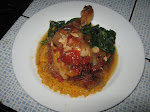
The best way to cook a chicken leg, to my thinking, is to braise it. Yes, crisp the skin, flip it over, splash in some wine and stock and pop it in the oven for about 45 minutes until it is meltingly tender. I have won over numerous “white meat only” people with this recipe. When served over mashed potatoes, risotto, or a good rice, this is tender and delicious.

Braised Chicken Legs

Preheat oven to 400

4 Full Chicken Legs (thigh and drumstick);

½ Cup Dry White or Red Wine;

1/2 Cup Chicken Stock or broth;

3 Cloves Garlic, chopped;

1 Cup Chopped Tomatoes (or better yet, home roasted tomatoes)

Salt and pepper the chicken legs, dust them with flour and crisp them in a bit of cooking oil, skin side down in a sauté pan you can put in the oven. Take them out when the skin is crisp and pour out the oil. Return the pan to the flame and add the garlic. Pour in the wine and allow to reduce by half. Add the chicken stock and bring to a boil. Add the tomatoes and the chicken legs, letting them settle into the liquid. Put the pan in the oven and cook for 45 minutes.

Remove the pan from the oven and remove the legs from the pan. Pour the liquid into something that can be easily skimmed and remove the fat from the top. To serve, return the chicken and the sauce to the pan and put them back in the oven for ten minutes.

Wednesday May 13, 2009 La Cusinga and Me


This words below are from our website describing La Cusinga.  The story, however is much deeper and much richer than these introductory words can describe.  La Cusinga represents a noble and successful effort to preserve this section of unspoiled coast and to keep it alive as a model of what true ecology can accomplish.  The dreams and visions of John Tresemer, the owner of La Cusinga and the Finca Tres Hermanas that surrounds it, have been realized here in what is a true example for all who would preserve and protect what remains of this, or any natural wonder. 

La Cusinga 
La Cusinga Lodge is a coastal rainforest eco lodge dedicated to marine and terrestrial conservation and environmental education. Its location on the southern Pacific coast provides guests with sweeping ocean views and a relaxing beach vacation. In addition La Cusinga is part of a private nature reserve that supplies the visitor with an unparalleled look at Costa Rican wildlife and rainforest. The reserve consists primarily of 250 hectares of virgin rainforest that borders thousands of more acres of privately protected forest. On Costa Rica’s still wild south-western Pacific coast, La Cusinga Lodge borders Ballena Marine National Park which was developed to protect the humpback whales that frequent the coast. La Cusinga Lodge was established in order to share the unique site with Costa Ricans as well as international visitors. Besides getting exposure to rural Costa Rican culture and beautiful vistas, visitors have access to highly prolific areas of primary tropical rainforest and unspoiled coast, all conveniently accessible. 

i returned to La Cusinga this past January, 2009, with a dream in mind.  I wanted to create a cuisine for our guests that would bridge the gap between what La Cusinga offered physically and spiritually, and what they were putting in their bodies when they ate here.  I knew from having previously lived in Costa Rica for over two years that there were organic farmers and that sustainable agriculture was being practiced, but at that time it had been limited in its scope as well as its distribution.  

My first steps upon returning were toward the local Feria to seek out and communicate my ideas with the growers and vendors who could provide me with a local, organic and sustainable product.  The fertile valleys of San Isidro that lie over the coastal mountains and to the Northeast of our Pacific location are rich and productive but are only now exploring the potential that they hold.  

I had in mind a vision that would support local farmers, fishermen and food artisans and one that would recreate (or perhaps, create) a new cuisine of Coastal Costa Rica.  I visit the markets each week to talk with growers and to develop the  relationships that I believe will be mutually beneficial as Costa Rica experiences its rapid growth on an international level
.
Organic farming is a new and not heavily supported concept in our part of Costa Rica.  It is a brave step for farmers to make, as local communities of both growers and consumers have never placed, or not known to place, an importance on farming organically and sustainably.  I feel a responsibility as a Chef here to be at the forefront of those encouraging and supporting these pioneers  

I came to La Cusinga almost three years ago not knowing what to expect.  My first time through here was characterized by a lack of understanding and appreciation on my part as well as an inability to recognize or connect with the local "flavor" that would make for a coherent package for out guests.  I now feel as if I have made a "connect" with the property and the vision.  I am not completely satisfied and hopefully, never will be, until we are able to produce, right here at La Cusinga, the greater share of the produce we serve.  However, the groundwork has been laid with local farmers and the availability and quality of organic produce is impressive.

Now at La Cusinga I serve a variety of organic lettuces and braising greens.  My salads include wedges or slices of rich red tomatoes as well as sweet !00 and yellow pear cherry tomatoes.  I roast organic beets and marinate them in balsamic vinegar to be served alongside the lettuces and topped with a locally made organic goat cheese.

My soups are made from roasted and steamed local organic vegetables and tiny organic yellow creamer potatoes have found their way onto my plates, nestled against filets of locally caught fish.
I am now using a local organic cocoa powder that still contains the nuggets of cocoa butter unlike the fined cocoa powder in the markets.

And better still, I am able to use palmito (hearts of palm), ginger, cilantro and its sawtooth leafed cousin culantro coyote, mangoes, hot and sweet chiles, mandarina limes and yucca root from our own Finca Tres Hermanas to serve in my dining room at La Cusinga.   The connection from jungle and farm to table is evolving.  May it continue to grow.